导演:
主演:
上映:
1948-11-19
更新:
2024-10-18 18:46:19,最后更新于
1年前
备注:
已完结
评分:
7.4分
评价:


TAG:
未知
剧情:
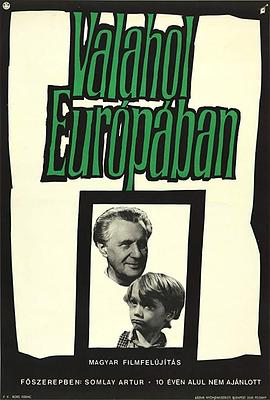
Somewhere in the remote region, the war ends. In the midst of ruined cities and houses in the streets, in rural hamlets, everywhere where people still live, are children who have lost their homes and parents. Abandoned, hungry, and in rags, defenseless and humiliated, they wander through the world. Hunger drives them. Little streams of orphans merge into a river which rushes forward and submerges everything in its path. The children do not know any feeling; they know only the world of their enemies. They fight, steal, struggle for a mouthful of food, and violence is merely a means to get it. A gang led by Cahoun finds a refuge in an abandoned castle and encounters an old composer who has voluntarily retired into solitude from a world of hatred, treason, and crime. How can they find a common ground, how can they become mutual friends The castle becomes their hiding place but possibly it will also be their first home which they may organize and must defend. But even for this, the price will be very high. To this simple story, the journalist, writer, poet, scriptwriter, movie director, and film theoretician Béla Balázs applied many years of experience. He and the director Géza Radványi created a work which opened a new postwar chapter in Hungarian film. Surprisingly, this film has not lost any of its impact over the years, especially on a profound philosophical level. That is to say, it is not merely a movie about war; it is not important in what location and in what period of time it takes place. It is a story outside of time about the joyless fate of children who pay dearly for the cruel war games of adults. At the time it was premiered, the movie was enthusiastically received by the critics. The main roles were taken by streetwise boys of a children's group who created their roles improvisationally in close contact with a few professional actors, and in the children's acting their own fresh experience of war's turmoil appears to be reflected. At the same time, their performance fits admirably into the mosaic of a very complex movie language. Balázs's influence revealed itself, above all, in the introductory sequences an air raid on an amusement park, seen in a montage of dramatic situations evoking the last spasms of war, where, undoubtedly, we discern the influence of classical Soviet cinematography. Shooting, the boy's escape, the locomotive's wheels, the shadows of soldiers with submachine guns, the sound of a whistle—the images are linked together in abrupt sequences in which varying shots and expressive sharp sounds are emphasized. A perfectly planned screenplay avoided all elements of sentimentality, time-worn stereotypes of wronged children, romanticism and cheap simplification. The authors succeeded in bridging the perilous dramatic abyss of the metamorphosis of a children's community. Their telling of the story (the scene of pillaging, the assault on the castle, etc) independently introduced some neorealist elements which, at that time, were being propagated in Italy by De Sica, Rossellini, and other film artists. The rebukes of contemporary critics, who called attention to formalism for its own sake have been forgotten. The masterly art of cameraman Barnabás Hegyi gives vitality to the poetic images. His angle shots of the children, his composition of scenes in the castle interior, are a living document of the times, and underline the atmosphere and the characters of the protagonists. The success of the picture was also enhanced by the musical art of composer Dénes Buday who, in tense situations, inserted the theme of the Marseilaise into the movie's structure, as a motive of community unification, as an expression of friendship and the possibility of understanding. Valahol Europaban is the first significant postwar Hungarian film. It originated in a relaxed atmosphere, replete with joy and euphoria, and it includes these elements in order to demonstrate the strength of humanism, tolerance, and friendship. It represents a general condemnation of war anywhere in the world, in any form.
收起
相关影片

2025
剧情片
日本
更新至高清
2025
剧情片
印度
சமுத்திரக்கனி, கவுதம் வாசுதேவ் மேனன் முதன்மை வேடங்களில் நடித்துள்ள திரைப்படம் ‘கார்மேனி செல்வம்’. லட
更新至HD

2009
剧情片
中国大陆
更新20240819期

2025
剧情片
意大利
更新至HD

2025
剧情片
法国 / 比利时
更新至HD

2026
剧情片
乌克兰
谢尔盖·斯特列尼科夫 Denis Kapustin Oleksandra Soroka Valeriy Velichko Karina Tymoshenko Max Tkachenko Aleksandr Rudko Serhiy Smiyan Danylo Bilyi Oleksiy Tyunin Oleksiy Sokur Olga Spytsia Serhiy Zhuravliov Audrey MacAlpine Andrii Lisnevs
一对夫妇心急如焚奔赴被占领的边境领土,拼尽全力营救遭到绑架的女儿。原本敲定的赎人交易骤然破裂,局势彻底滑向失控。绝境之下,代号索瓦的特战指挥官与代号希德的技术工程师联手,牵头发起一场孤注一掷的深入营救行动。整场行动由一名战地记者全程跟拍,以直播的形式同步推向全球观众。身处险境的记者,既手握记录真相的镜头,也面临着生死一线的处境,不得不在脱身求生与揭露真相之间做出艰难抉择。
更新至高清
2025
剧情片
意大利
一个男孩和一位老妇人被迫一起度过一个夏天。这是现代与传统、快速与缓慢之间的碰撞。这是一个充满恐惧和发现的夏天,但同样也有冒险、里程碑和失落——一个过后一切都将不再相同的夏天。
更新至HD
2025
剧情片
日本
更新至HD

0
剧情片
大陆
故事围绕九尾狐三生三世的千年宿命与定海神针展开。远古青丘,九尾白狐女娇遵师嘱入世,邂逅治水的大禹,凭龙族信物借出东海定海神针,助夫君镇压作乱蛟龙、平定洪荒水患,二人结为夫妻。为保全大禹圣王名望,女娇自愿被封印轩辕坟千年。 封印松动后,女娇受女娲之命附身
更新至HD

2024
剧情片
中国香港
黄婉曼 蔡雪莹 倪嘉雯 黄嘉雯 廖慧仪 伍倩彤 陈嘉倩 胡敏芝 吴兆麟 吴浩康 巩姿希 陈奂仁 区永权 陈凯琳 姚子羚 麦玲玲 方皓玟 洪永城 冯盈盈 单立文 吴业坤 黄婧灵 叶靖仪 蔡景行 萧正楠 江嘉敏 冼迪琦 何泳芍 栢天男 苏民峰 姜皓文 森美 刘颖镟 温碧霞 禾浩辰 赖彦妤 邵音音 谢嫣薇 彭翔翎 施焯日 布乐文
香港匯聚環球美食,特色佳餚、貼地料理受到識飲識食之人的密切關注!黃婉曼、蔡雪瑩、倪嘉雯、黃嘉雯、廖慧儀、伍倩彤等美食主播、主持,緊貼最新飲食情報與優惠,深入了解滋味背後的故事。從不同平台網羅超人氣食店的情報,主持親自出動排隊、試食,帶來真實食評。不設堂食的外賣小店亦深受追捧,有何必吃之選?經營食店難免嘗盡甜酸苦辣,攝製隊追蹤主理人忙碌的一天,從搜購食材、準備材料到開檔做生意,揭開「故事味緣」。
HD

2026
剧情片
美国
更新至HD

2025
剧情片
日本
更新至HD
2026
剧情片
美国
已完结

2026
剧情片
中国大陆
更新至HD

正在热播
更多
2022
国产动漫
大陆
独家推荐
更新至第140集
2024
剧情片
中国大陆
独家推荐
HD

2024
国产剧
中国大陆,新加坡
独家推荐
全40集 彩蛋 花絮