剧情:
Somewhere in the remote region, the war ends. In the midst of ruined cities and houses in the streets, in rural hamlets, everywhere where people still live, are children who have lost their homes and parents. Abandoned, hungry, and in rags, defenseless and humiliated, they wander through the world. Hunger drives them. Little streams of orphans merge into a river which rushes forward and submerges everything in its path. The children do not know any feeling; they know only the world of their enemies. They fight, steal, struggle for a mouthful of food, and violence is merely a means to get it. A gang led by Cahoun finds a refuge in an abandoned castle and encounters an old composer who has voluntarily retired into solitude from a world of hatred, treason, and crime. How can they find a common ground, how can they become mutual friends The castle becomes their hiding place but possibly it will also be their first home which they may organize and must defend. But even for this, the price will be very high. To this simple story, the journalist, writer, poet, scriptwriter, movie director, and film theoretician Béla Balázs applied many years of experience. He and the director Géza Radványi created a work which opened a new postwar chapter in Hungarian film. Surprisingly, this film has not lost any of its impact over the years, especially on a profound philosophical level. That is to say, it is not merely a movie about war; it is not important in what location and in what period of time it takes place. It is a story outside of time about the joyless fate of children who pay dearly for the cruel war games of adults. At the time it was premiered, the movie was enthusiastically received by the critics. The main roles were taken by streetwise boys of a children's group who created their roles improvisationally in close contact with a few professional actors, and in the children's acting their own fresh experience of war's turmoil appears to be reflected. At the same time, their performance fits admirably into the mosaic of a very complex movie language. Balázs's influence revealed itself, above all, in the introductory sequences an air raid on an amusement park, seen in a montage of dramatic situations evoking the last spasms of war, where, undoubtedly, we discern the influence of classical Soviet cinematography. Shooting, the boy's escape, the locomotive's wheels, the shadows of soldiers with submachine guns, the sound of a whistle—the images are linked together in abrupt sequences in which varying shots and expressive sharp sounds are emphasized. A perfectly planned screenplay avoided all elements of sentimentality, time-worn stereotypes of wronged children, romanticism and cheap simplification. The authors succeeded in bridging the perilous dramatic abyss of the metamorphosis of a children's community. Their telling of the story (the scene of pillaging, the assault on the castle, etc) independently introduced some neorealist elements which, at that time, were being propagated in Italy by De Sica, Rossellini, and other film artists. The rebukes of contemporary critics, who called attention to formalism for its own sake have been forgotten. The masterly art of cameraman Barnabás Hegyi gives vitality to the poetic images. His angle shots of the children, his composition of scenes in the castle interior, are a living document of the times, and underline the atmosphere and the characters of the protagonists. The success of the picture was also enhanced by the musical art of composer Dénes Buday who, in tense situations, inserted the theme of the Marseilaise into the movie's structure, as a motive of community unification, as an expression of friendship and the possibility of understanding. Valahol Europaban is the first significant postwar Hungarian film. It originated in a relaxed atmosphere, replete with joy and euphoria, and it includes these elements in order to demonstrate the strength of humanism, tolerance, and friendship. It represents a general condemnation of war anywhere in the world, in any form.
收起
【已完结】
官网同步更新,若有延迟请稍作休息再看看
官网同步更新,若有延迟请稍作休息再看看
【已完结】
官网同步更新,若有延迟请稍作休息再看看
官网同步更新,若有延迟请稍作休息再看看
相关影片

2009
剧情片
中国大陆
更新20240819期

2026
剧情片
泰国
三名女子沦为冷血电话诈骗的受害者。为了讨回公道,他们决定对抗夺走他们金钱与尊严的犯罪网络。
更新至高清

已完结

2026
剧情片
美国
已完结
2017
剧情片
美国
已完结

2026
剧情片
美国
丹尼斯·奎德 阿莉尔·凯贝尔 米洛·文堤米利亚 索菲亚·斯凯尔顿 乔比·詹姆斯 特雷斯·阿德金斯 约书亚·巴塞特 安赫拉·约翰逊 杰森·伯基 Del Sable 艾比·格洛弗 萨米·戴尔 妮可儿·德伯特 兰迪·麦克道维尔
Bart Millard, lead singer of MercyMe, faces a personal crisis at the peak of his success. As his world unravels, he struggles with his beliefs and inner demons while seeking a path through adversity.
更新至高清

2025
剧情片
印度
更新至高清
1975
剧情片
美国
已完结

更新至高清

2026
剧情片
日本
更新至高清
2025
剧情片
加拿大 / 卢森堡
麦赫迪·麦斯卡尔 Aron Archer 塞琳·邦尼 Maxime Afshar Paul Ahmarani Christophe Baril Sebastien Beaulac Giuseppe Calvinisti 塞利娜·卡马拉 Sylvestre Caron Emmanuel Chevalier 乔尔·德尔索 Florian Francois Shiva Gholamianzadeh Amir Hedayati Colette Kieff
Saad, a young Moroccan illegal immigrant, is planning a perilous journey to Canada with Reza, his Iranian lover. In Montreal, Saad is called upon to save his beloved from certain deportation to Iran, where inevitable punishment awaits.
更新至高清
1995
剧情片
加拿大 / 美国 / 日本
更新至高清
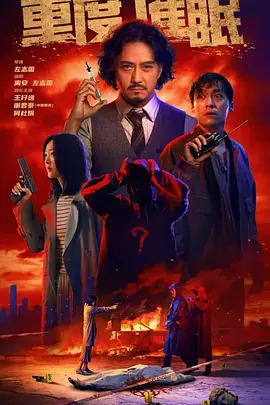
2025
剧情片
中国大陆
更新至高清
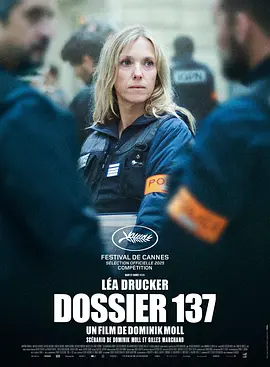
2025
剧情片
法国
蕾雅·德吕盖 帕斯卡·桑格拉 克莱尔·博德森 朱利安·利蒂 佛罗伦斯·维亚拉 海伦·亚历山德里迪斯 Solan Machado Graner 安东尼娅·布雷西 杰纳维夫·马尼奇 Christian Sinniger Sandra Colombo Côme Péronnet 瓦伦丁·坎帕涅 Mathilde Riu 雅尼克·莫泽尔 古斯拉姬·马兰达 戈捷·巴图埃 Laurent Bozzi 亚历珊德拉·耶尔马克 斯蒂文·德里森
「为什么大家讨厌警察?」男孩询问母亲。身为警察的史黛芬妮,负责的却是警察暴力与失职案件调查。2018年,一名青年随亲友来到巴黎参与街头抗议,却因警方开枪,导致永久性脑部损伤。家人提出指控,警方却矢口否认,关键证据亦是不足。内外压力夹攻之下,史黛芬妮仍奋力调查,调阅摄像头比对、还原警员动线,越逼近真相之际,同僚的敌意也越发强烈⋯⋯
更新至高清

2025
剧情片
阿根廷 / 智利 / 西班牙
Daniel Antivilo Juan Ignacio Cane 马可·安东尼奥·卡波尼 奥斯卡·德·拉·弗恩特 Pilar Mestre Del Bono 路易斯·杜博 Pablo Díaz 佩德罗·方汀 Verónica Gerez 费德里科·利斯 克里斯蒂安·萨尔格罗
两个互相憎恨的兄弟卷入了伪造他人死亡并将他们偷运出国的刑事事件。伴随着犯罪团伙的内外矛盾,这场复杂的跨国行动出现了各种突发问题。兄弟二人经历了暴力、威胁和救赎的旅程,终于获得重生并达成了和解。影片是个公路犯罪片,又糅合了黑色幽默的成分。
更新至高清

正在热播
更多
2022
国产动漫
大陆
独家推荐
更新至第140集
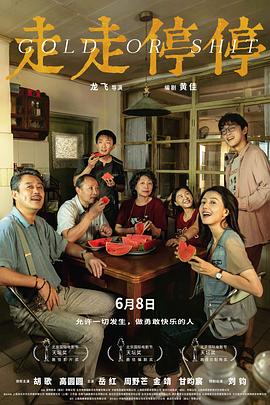
2024
剧情片
中国大陆
独家推荐
HD

2024
国产剧
中国大陆,新加坡
独家推荐
全40集 彩蛋 花絮